Position Sizing & Portfolio Management
Finding quality research opportunities is only one part of investing. Equally important is understanding how each investment fits within your overall portfolio. This lesson introduces the principles of position sizing and portfolio management from an educational perspective, helping you think about diversification, consistency and long-term investing rather than focusing on individual trades.
What You'll Learn
- What position sizing means.
- Why portfolio management matters.
- The importance of diversification.
- Avoiding concentration risk.
- How EdgeBreak supports portfolio research.
Looking Beyond Individual Stocks
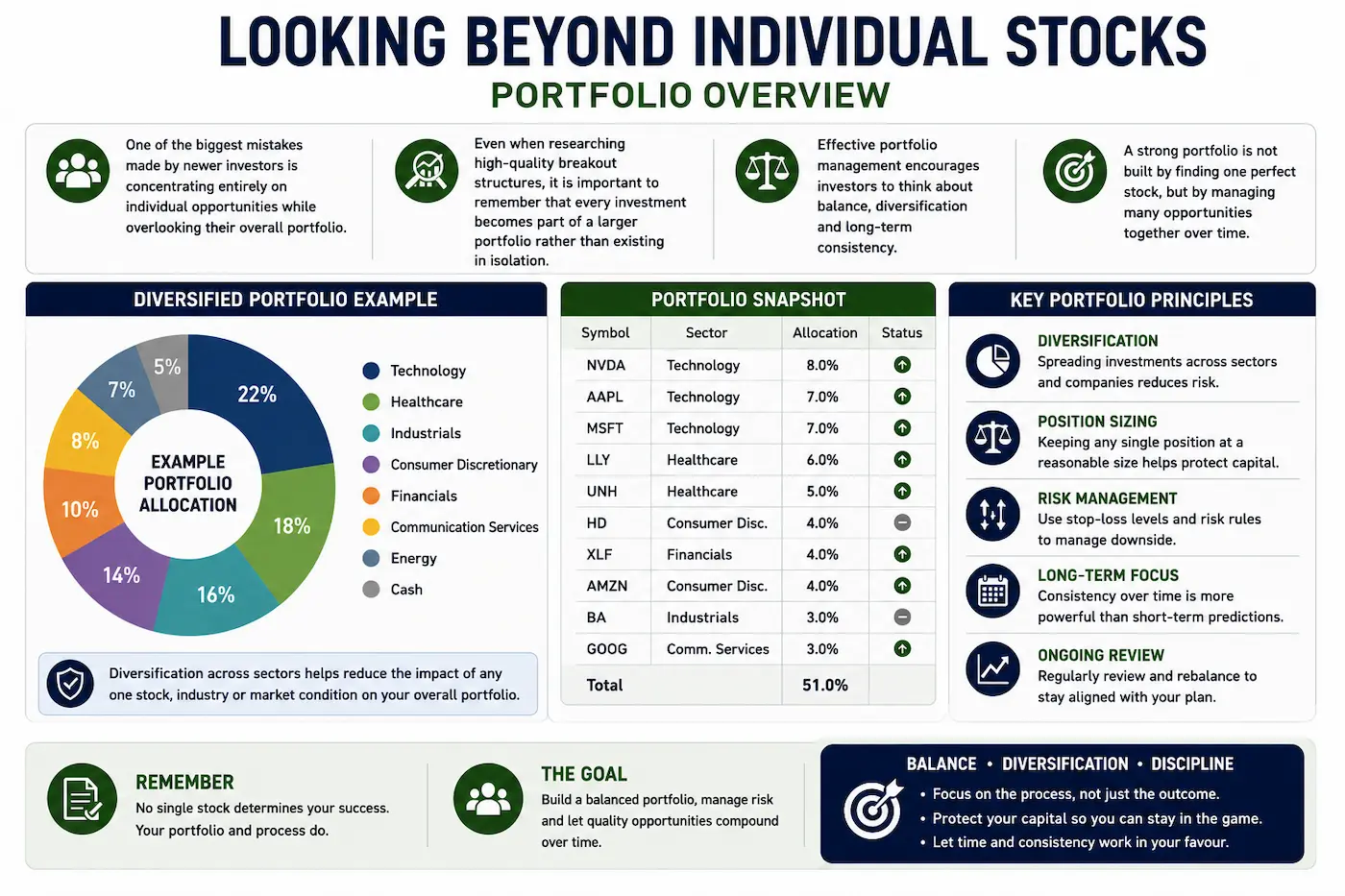
One of the biggest mistakes made by newer investors is concentrating entirely on individual opportunities while overlooking their overall portfolio.
Even when researching high-quality breakout structures, it is important to remember that every investment becomes part of a larger portfolio rather than existing in isolation.
Effective portfolio management encourages investors to think about balance, diversification and long-term consistency.
What Is Position Sizing?
Position sizing refers to the proportion of your overall portfolio allocated to a particular investment.
Different investors use different approaches depending on their objectives, experience and personal financial circumstances.
Rather than focusing on exact percentages, it is helpful to understand that every position contributes differently to the overall level of portfolio exposure.
Why Diversification Matters
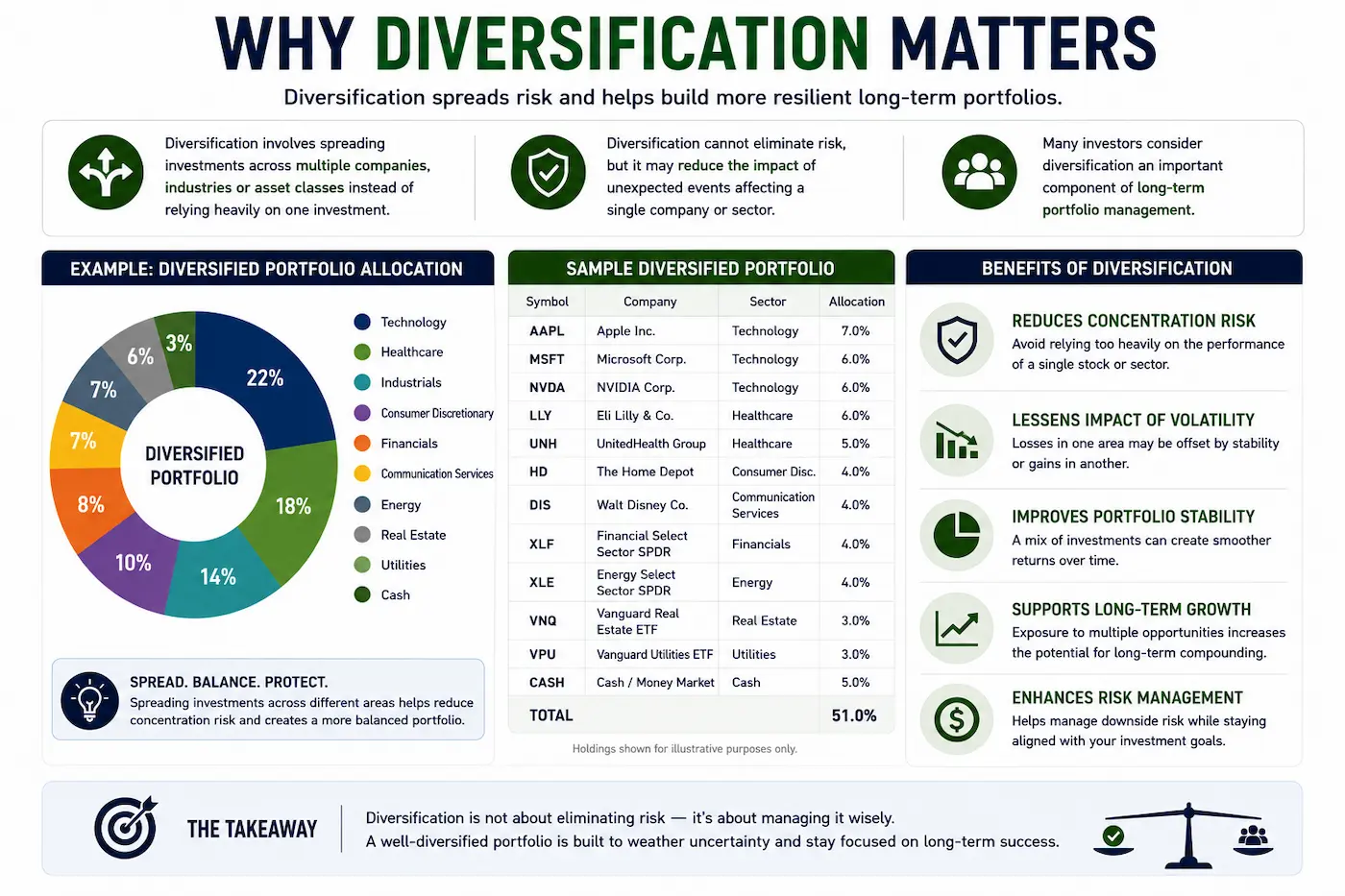
Diversification involves spreading investments across multiple companies, industries or asset classes instead of relying heavily on one investment.
Diversification cannot eliminate risk, but it may reduce the impact of unexpected events affecting a single company or sector.
Many investors consider diversification an important component of long-term portfolio management.
Understanding Concentration Risk
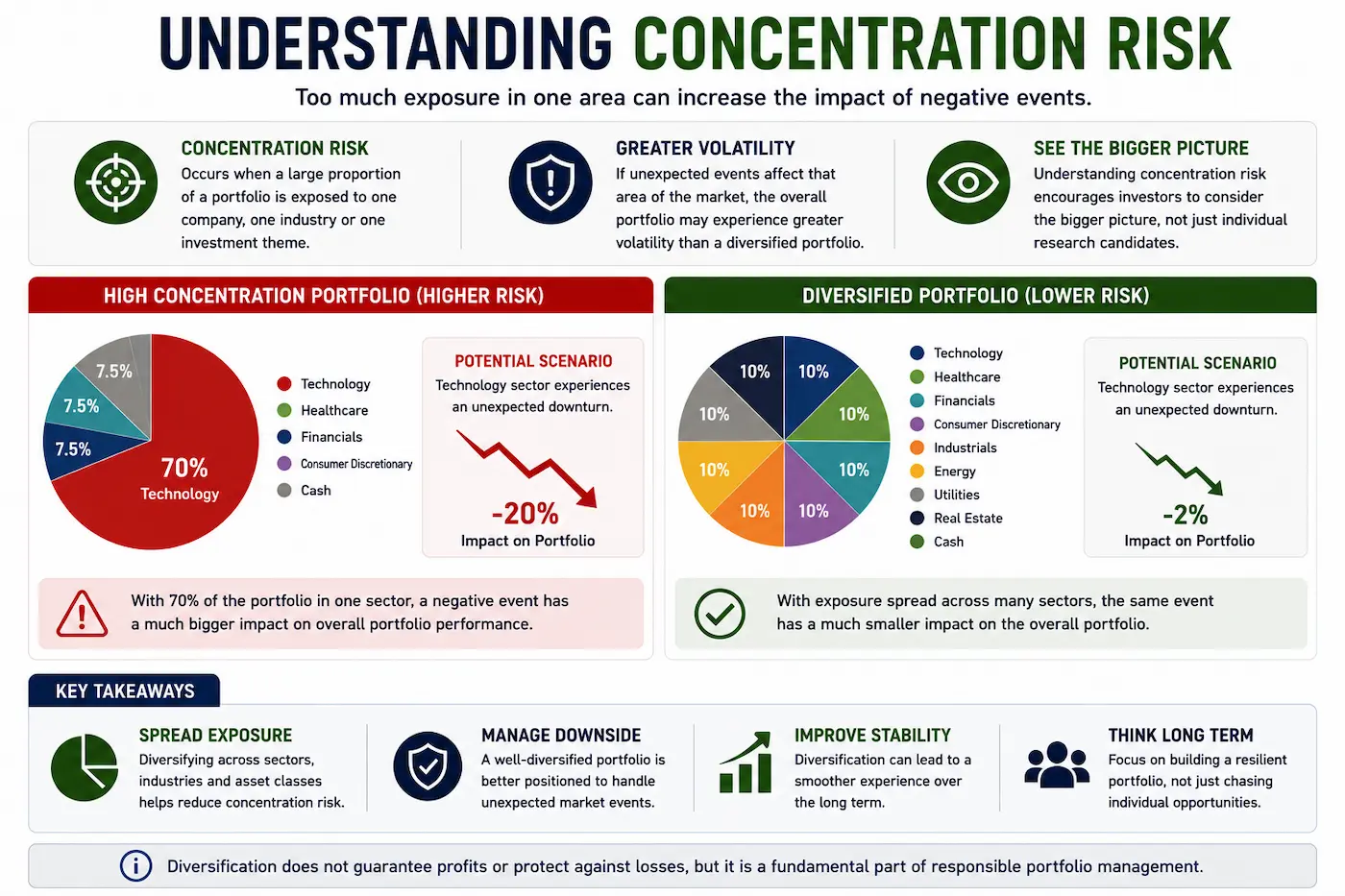
Concentration risk occurs when a large proportion of a portfolio is exposed to one company, one industry or one investment theme.
If unexpected events affect that area of the market, the overall portfolio may experience greater volatility than a more diversified portfolio.
Understanding concentration risk encourages investors to consider the bigger picture rather than focusing only on individual research candidates.
Quality Over Quantity
A larger portfolio does not automatically mean a better portfolio.
Many investors prefer maintaining a manageable number of well-researched companies rather than monitoring dozens of stocks they know very little about.
Quality research and ongoing monitoring often provide greater value than simply increasing the number of investments.
Review Your Portfolio Regularly
Portfolio management is an ongoing process.
As market conditions change, investors often review whether individual holdings continue displaying the characteristics that originally attracted their attention.
Questions to ask include:
- Has the market structure changed?
- Are higher lows still developing?
- Has resistance been broken?
- Has volume behaviour changed?
- Has the overall research thesis changed?
Using EdgeBreak to Organise Your Portfolio Research
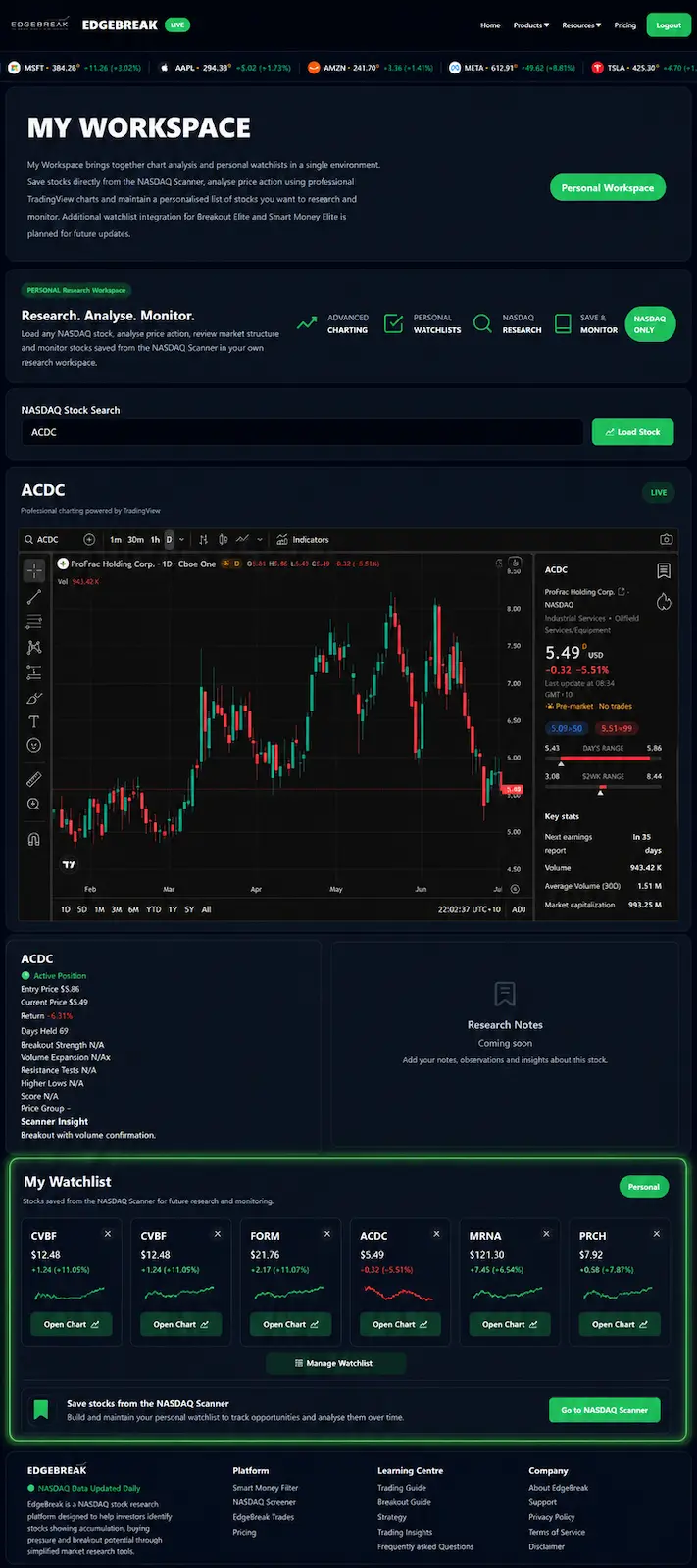
EdgeBreak is designed to support organised portfolio research through structured watchlists and market scanners.
Members can monitor developing opportunities, compare breakout quality, review charts and maintain organised watchlists inside My Workspace.
This structured approach encourages ongoing research rather than reactive decision-making.
Think Long Term
Successful investing is rarely about finding one perfect opportunity.
Instead, it is often built through years of disciplined research, continuous learning and maintaining a balanced portfolio aligned with your own financial objectives.
A structured research process allows investors to make more informed decisions while avoiding unnecessary emotional reactions to short-term market fluctuations.
Lesson Summary
Position sizing and portfolio management encourage investors to look beyond individual stocks and consider how each investment contributes to their overall portfolio. Diversification, consistency and regular portfolio reviews help support long-term investing. EdgeBreak assists this process by providing structured research tools that help members organise and monitor developing opportunities over time.
Key Takeaways
- Every investment forms part of a larger portfolio.
- Diversification helps manage overall portfolio exposure.
- Concentration risk should be considered during research.
- Quality research is more valuable than simply owning more stocks.
- Review your portfolio regularly as market conditions change.
Practical Exercise
Review the stocks currently saved in your EdgeBreak watchlist.
- Group them by industry.
- Identify any sectors that appear overrepresented.
- Compare the overall quality of each breakout structure.
- Review the weekly trend for each stock.
- Consider whether your watchlist is balanced or concentrated in one area.
Research Reminder
This lesson is intended for educational purposes only and does not recommend how much to invest or how to allocate your portfolio. Position sizing and portfolio management should always reflect your own financial circumstances, objectives and risk tolerance. EdgeBreak provides research tools and educational resources only and does not provide financial advice.
Continue Your Journey
Lesson 3.5 – Managing Winning Trades
Learn how to manage winning positions by monitoring market structure, evaluating changes in momentum and following a disciplined research process rather than reacting emotionally to short-term price movements.