Managing Winning & Losing Trades
Every investor experiences both winning and losing investments. Neither outcome defines the quality of your research process. One of the most valuable habits you can develop is reviewing market positions objectively, learning from every outcome and continually refining your research. This lesson focuses on building long-term consistency rather than reacting emotionally to individual market movements.
What You'll Learn
- How to review investments objectively.
- Why emotions influence investment decisions.
- How market structure changes over time.
- Learning from both positive and negative outcomes.
- Building continuous improvement into your research routine.
Every Investment Teaches Something
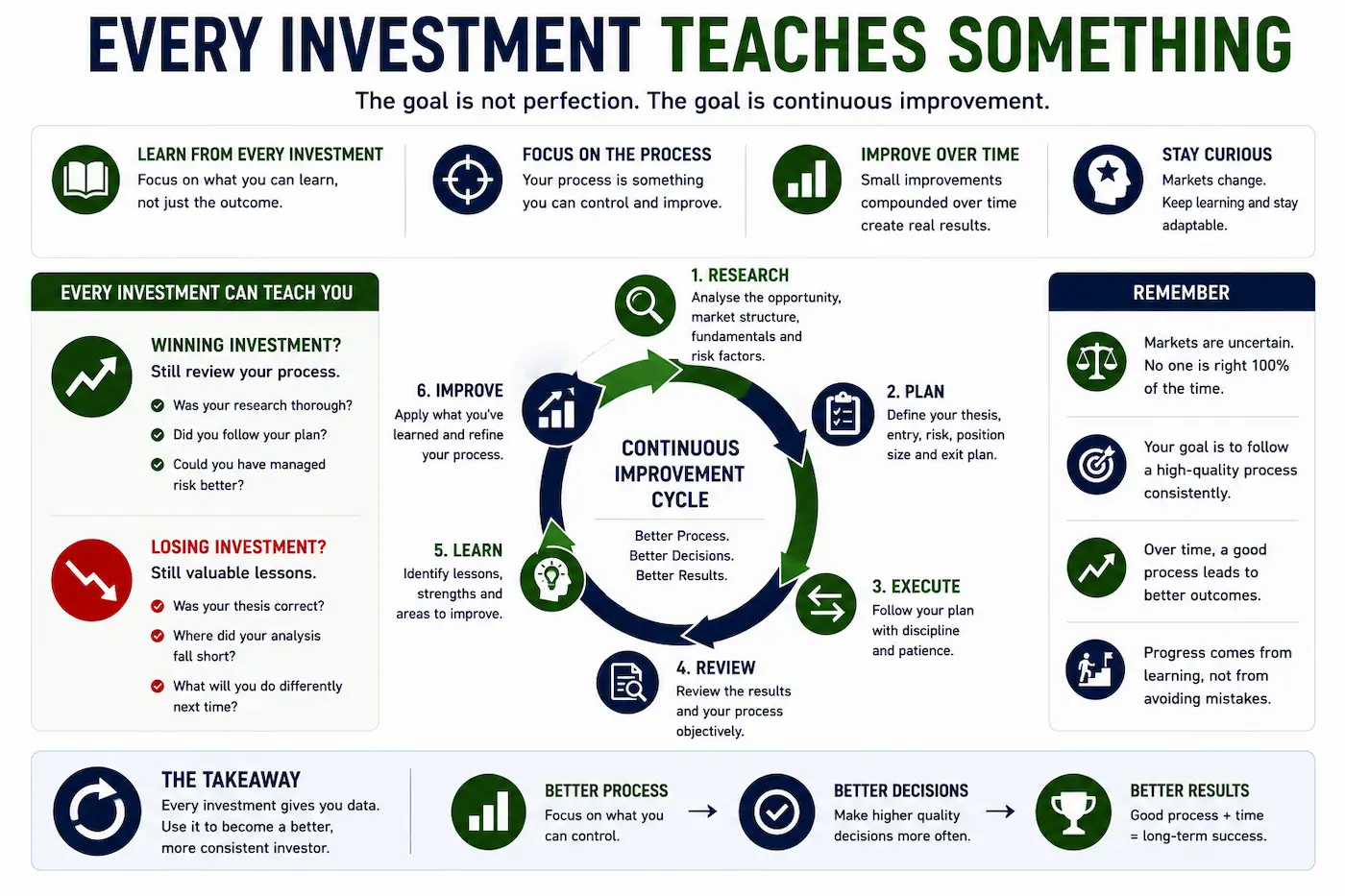
One of the greatest advantages experienced investors have is their willingness to learn from every investment rather than focusing only on the financial outcome.
A profitable investment can still involve poor research, while an investment that loses value may have been supported by excellent preparation.
Markets are uncertain. Your goal is to continually improve your research process rather than judging yourself by individual results.
Review Winning Investments
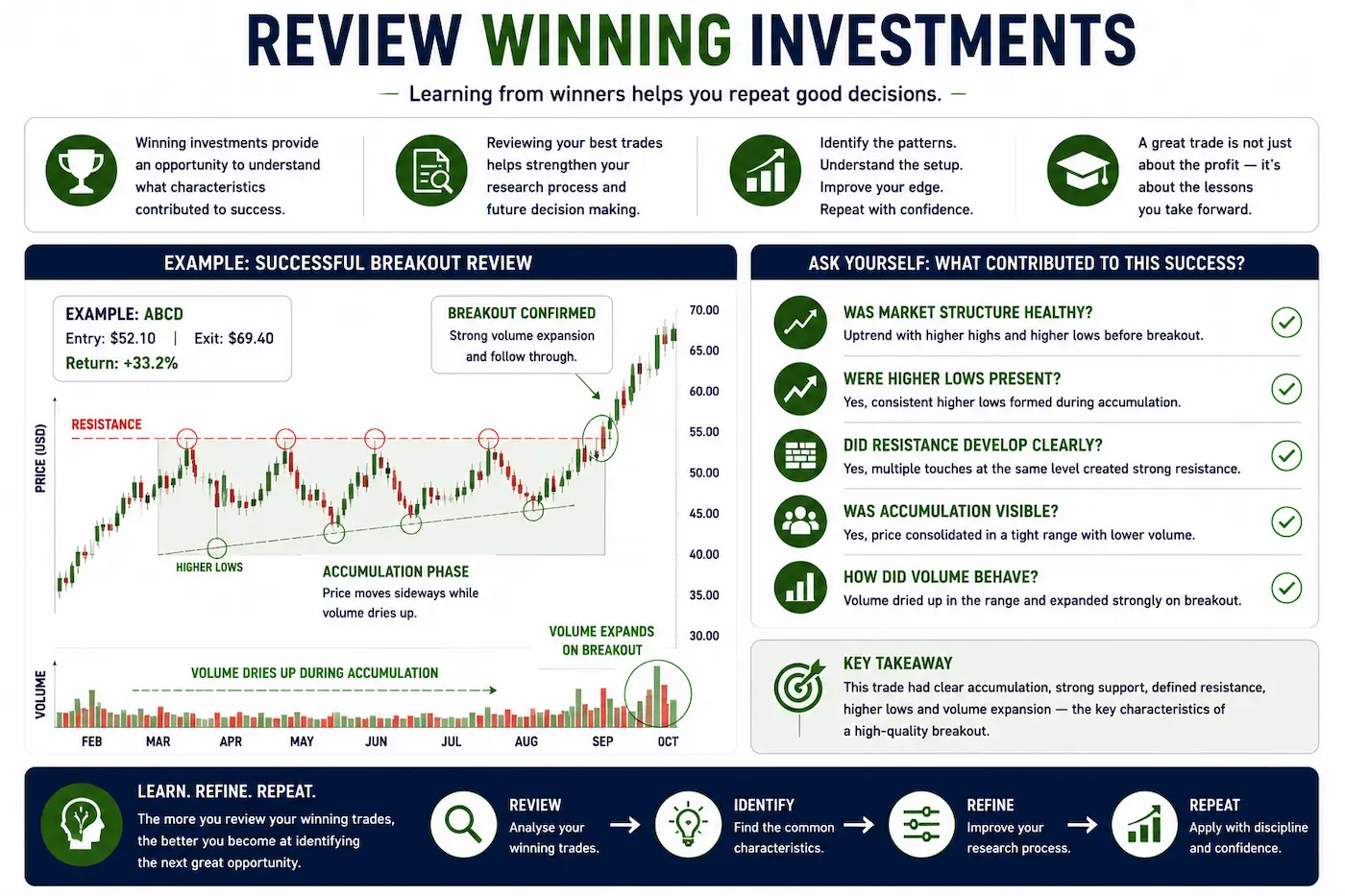
Winning investments provide an opportunity to understand what characteristics contributed to a successful research outcome.
Ask yourself:
- Was market structure healthy?
- Were higher lows present?
- Did resistance develop clearly?
- Was accumulation visible?
- How did volume behave?
Understanding these characteristics helps strengthen future research.
Review Losing Investments
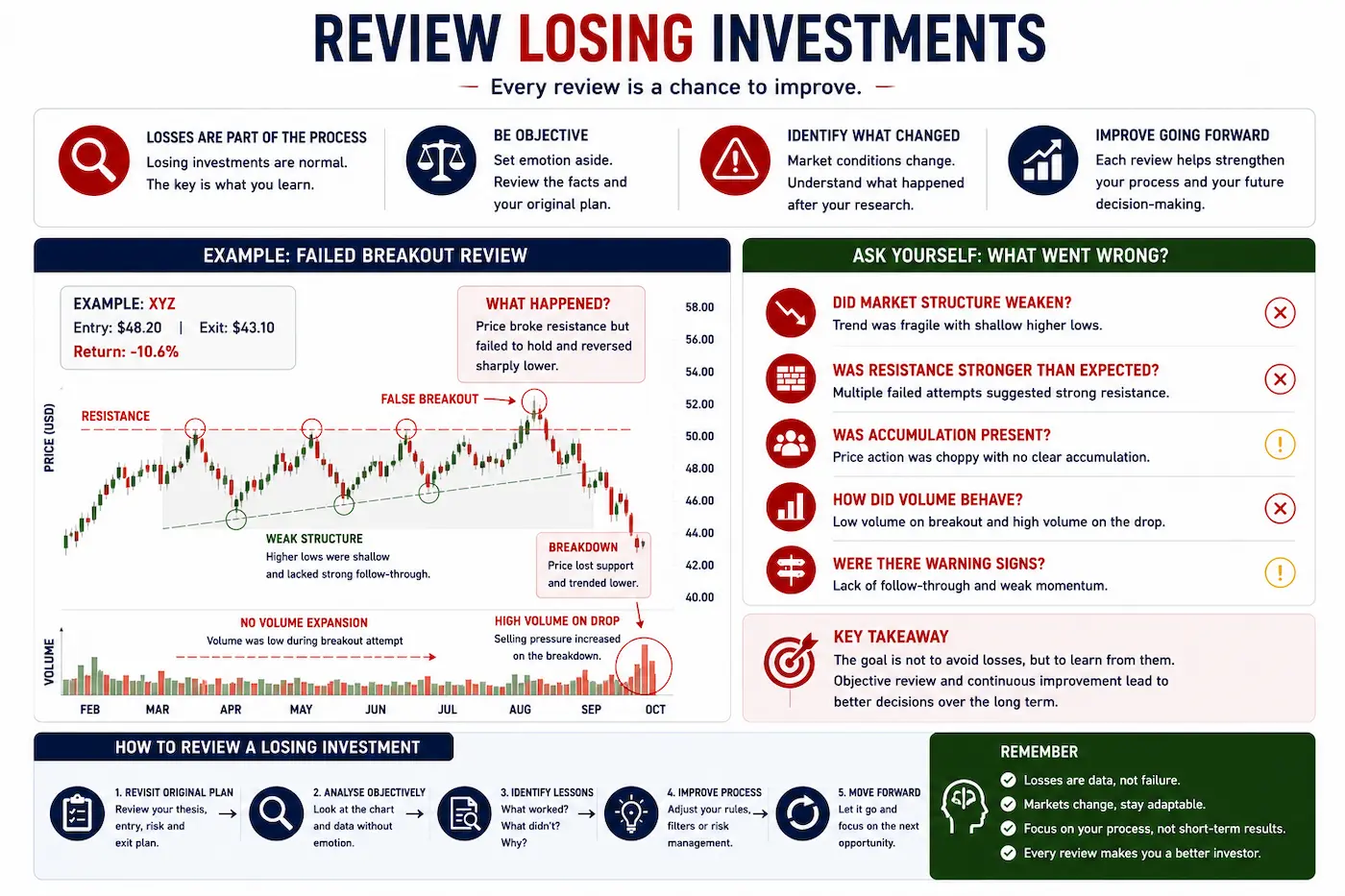
Losing investments should not automatically be viewed as mistakes.
Instead, review the original research objectively.
Consider whether market structure changed after your research or whether warning signs were already present but overlooked.
Every review provides an opportunity to improve future decision-making.
Avoid Emotional Decisions
Markets naturally create emotional responses.
Greed during strong rallies and fear during market declines often lead investors away from their research process.
One of the biggest advantages of following a structured research methodology is that it encourages decisions based on evidence rather than emotion.
Consistency almost always produces better long-term habits than reacting to headlines or short-term market movements.
Monitor Changing Market Structure
Markets constantly evolve.
A stock displaying healthy market structure today may begin showing signs of weakness in the future.
Continue monitoring:
- Higher highs and higher lows.
- Resistance and support.
- Volume behaviour.
- Accumulation characteristics.
- Overall trend direction.
Regular chart reviews help investors understand whether the original research remains valid.
Keep a Research Journal
Many experienced investors maintain detailed research notes.
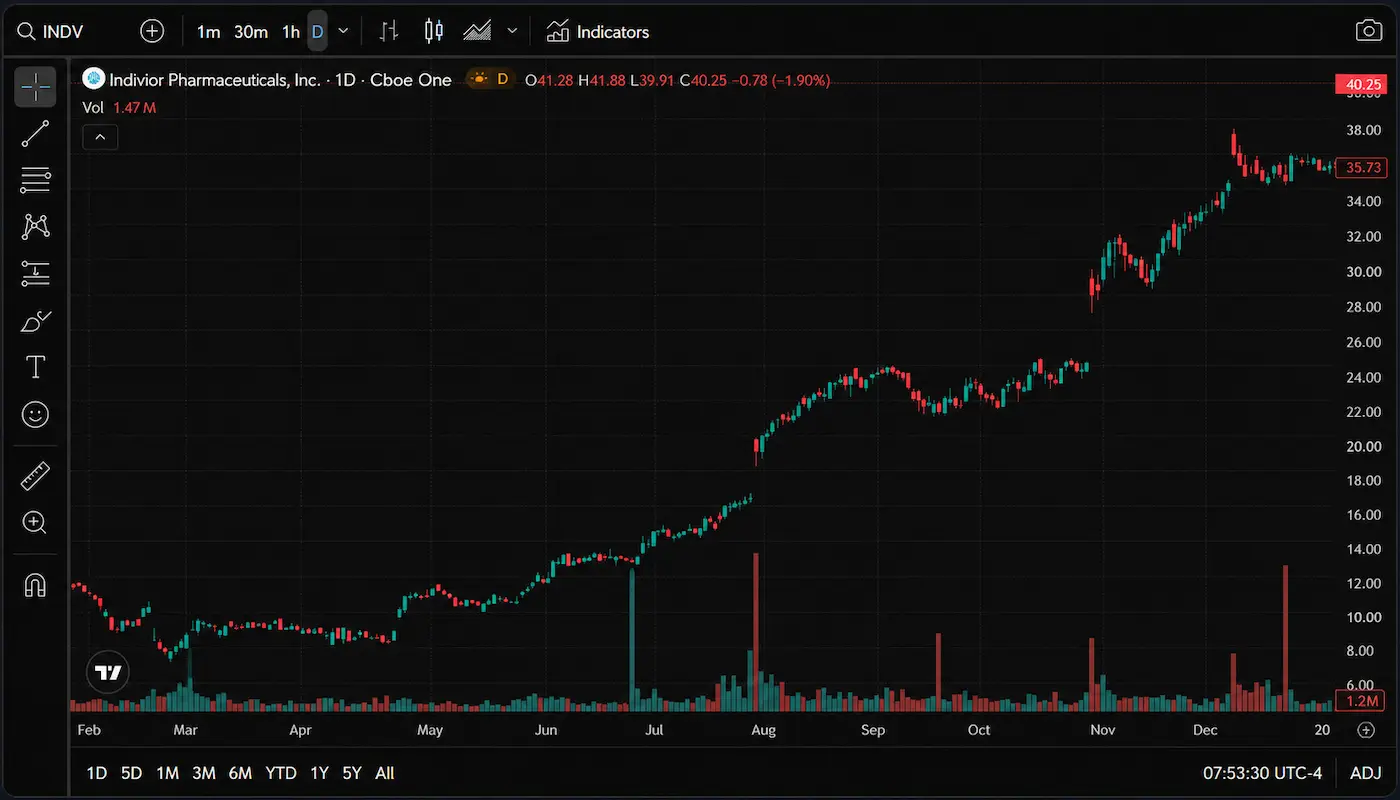
Recording why a stock was added to your watchlist, what characteristics attracted your attention and how the market structure developed over time creates an invaluable learning resource.
Your journal should focus on observations rather than predictions.
Over months and years, these notes often reveal recurring market behaviours that become difficult to recognise from memory alone.
Using My Workspace
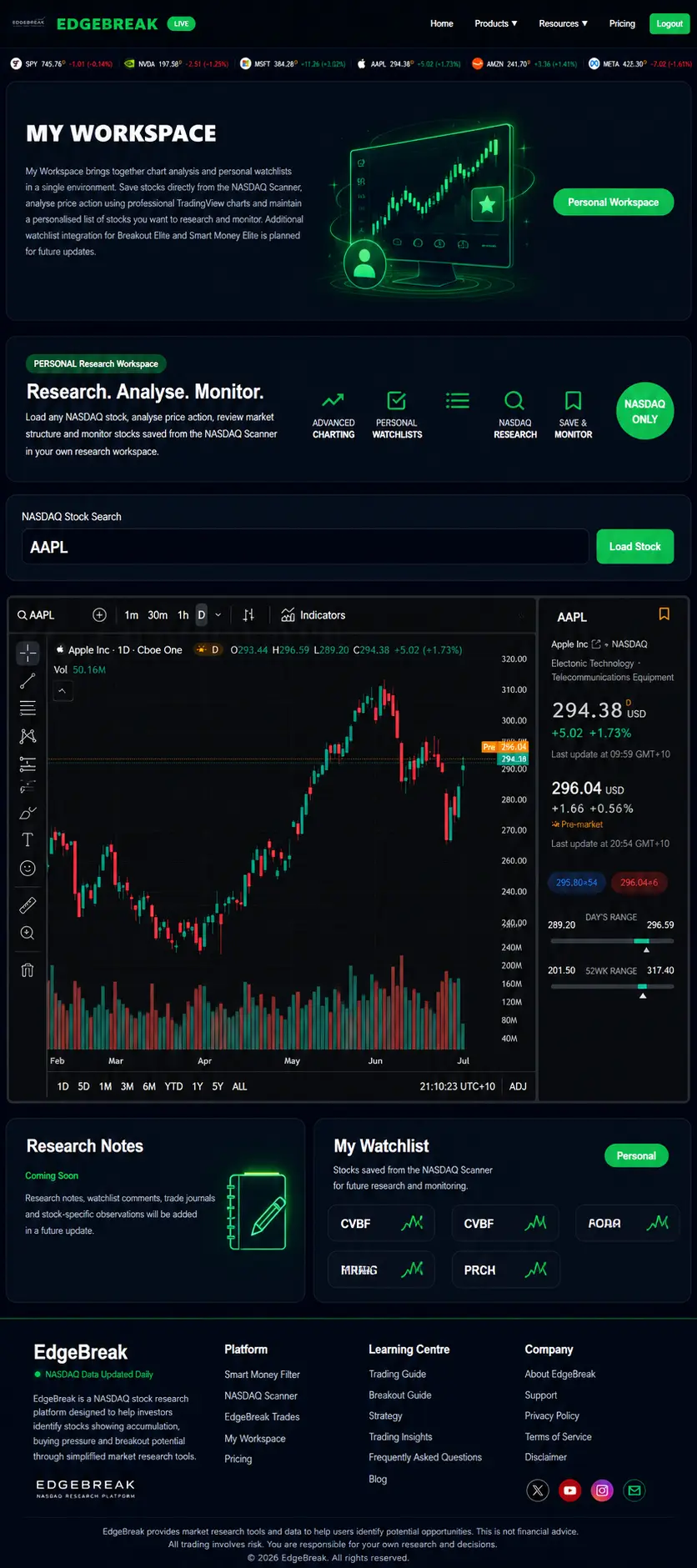
EdgeBreak's My Workspace has been designed to support this ongoing review process.
Saved watchlists, interactive TradingView charts and research notes allow members to monitor developing opportunities over time rather than relying on memory.
The goal is continual improvement—not perfection.
Focus on Long-Term Improvement
Becoming a better investor is a gradual process.
Each chart reviewed, each watchlist updated and each lesson completed contributes to a deeper understanding of market behaviour.
Rather than measuring success by one investment, focus on becoming a more knowledgeable and disciplined researcher over time.
Lesson Summary
Every investment provides an opportunity to learn. Reviewing both successful and unsuccessful outcomes objectively helps investors strengthen their research process and avoid emotional decision-making. EdgeBreak supports this ongoing learning journey through structured scanners, organised watchlists and educational resources designed to encourage continuous improvement.
Key Takeaways
- Review every investment objectively.
- Focus on improving your research process.
- Avoid emotional market decisions.
- Continue monitoring market structure over time.
- Keep research notes and build long-term knowledge.
Practical Exercise
Select one stock currently saved in My Workspace.
- Review the original reasons you saved it.
- Compare today's market structure with your first observations.
- Identify any changes in resistance, higher lows or volume.
- Write three things you've learned from following the stock.
- Consider how those lessons could improve future research.
Research Reminder
EdgeBreak Academy is designed to improve research skills through education and structured market analysis. The information presented throughout the platform should not be considered financial advice or investment recommendations. Always conduct your own independent research before making financial decisions.
Congratulations!
Lesson 4.1 – Mastering the NASDAQ Scanner
Learn how to use the EdgeBreak NASDAQ Scanner to efficiently identify research opportunities, apply filters, interpret scanner results and build a structured workflow for analysing potential breakout candidates.