Risk Management Basics
Successful investing is not simply about finding great opportunities—it is also about managing risk. Every investment involves uncertainty, which is why protecting your capital and maintaining a disciplined research process are essential for long-term success. This lesson introduces the principles of risk management and explains why preparation is just as important as opportunity.
What You'll Learn
- Why risk management is important.
- How protecting capital supports long-term investing.
- Why no investment is guaranteed.
- The importance of consistency and discipline.
- How EdgeBreak supports a structured research process.
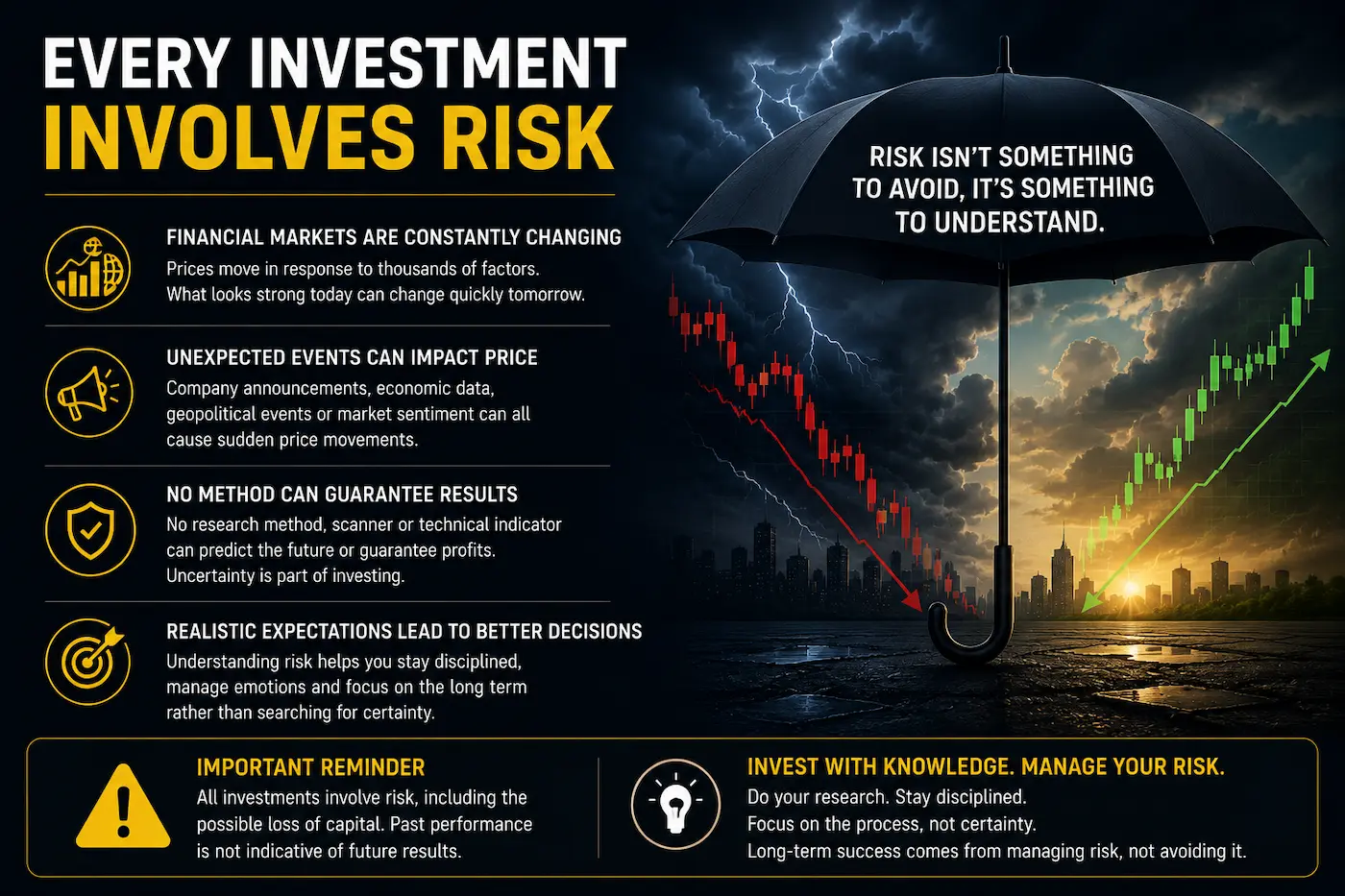
Every Investment Involves Risk
Financial markets are constantly changing. Even companies with strong fundamentals and healthy market structure can experience unexpected price movements due to company announcements, economic events or broader market conditions.
Because uncertainty is part of investing, no research method, scanner or technical indicator can guarantee future results.
Understanding this reality helps investors approach the market with realistic expectations rather than searching for certainty.
Protecting Capital
One of the most valuable principles in investing is recognising that preserving capital allows you to continue participating in future opportunities.
Markets will always present new opportunities, but investors who expose themselves to unnecessary risk may not be in a position to benefit from them.
Long-term success is often built through consistency rather than attempting to maximise every opportunity.
Focus on Process, Not Outcomes
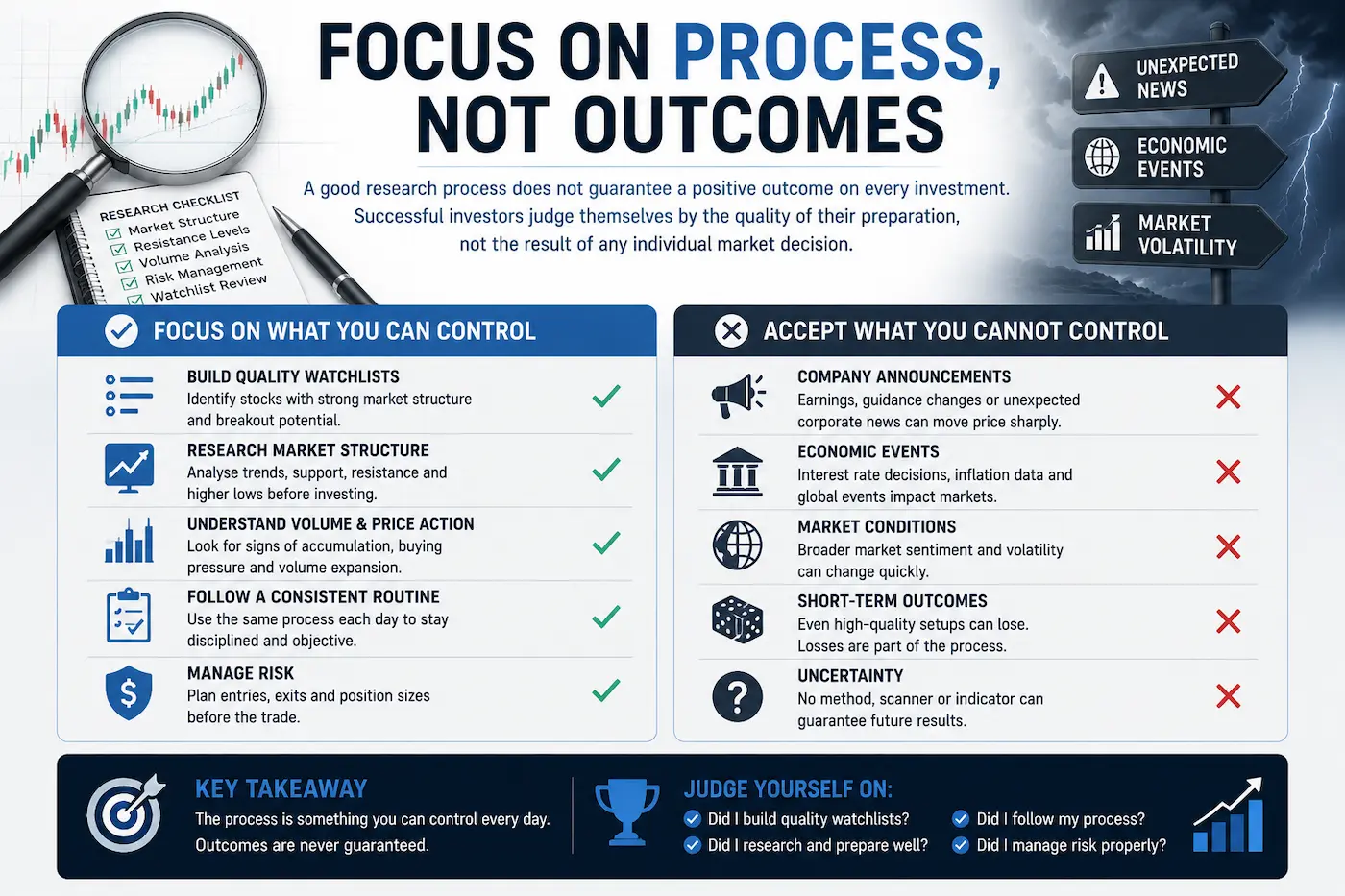
A good research process does not guarantee a positive outcome on every investment.
Instead, successful investors often judge themselves by the quality of their preparation rather than the result of any individual market decision.
Building quality watchlists, researching market structure and following a consistent routine are behaviours that remain valuable regardless of short-term market outcomes.
Diversification
Many investors choose to spread their investments across different companies, industries or asset classes rather than relying on a single investment.
Diversification can help reduce the impact of unexpected events affecting one particular company or sector.
The appropriate level of diversification varies between investors and should always be considered alongside individual financial circumstances and objectives.
Managing Emotions
Markets can create strong emotional responses.
Excitement during rising markets and fear during falling markets often encourage impulsive decisions.
Following a structured research process helps reduce emotional decision-making by encouraging preparation, patience and consistency.
Rather than reacting to headlines or daily price movements, investors can focus on objective market characteristics.
Building Consistent Habits
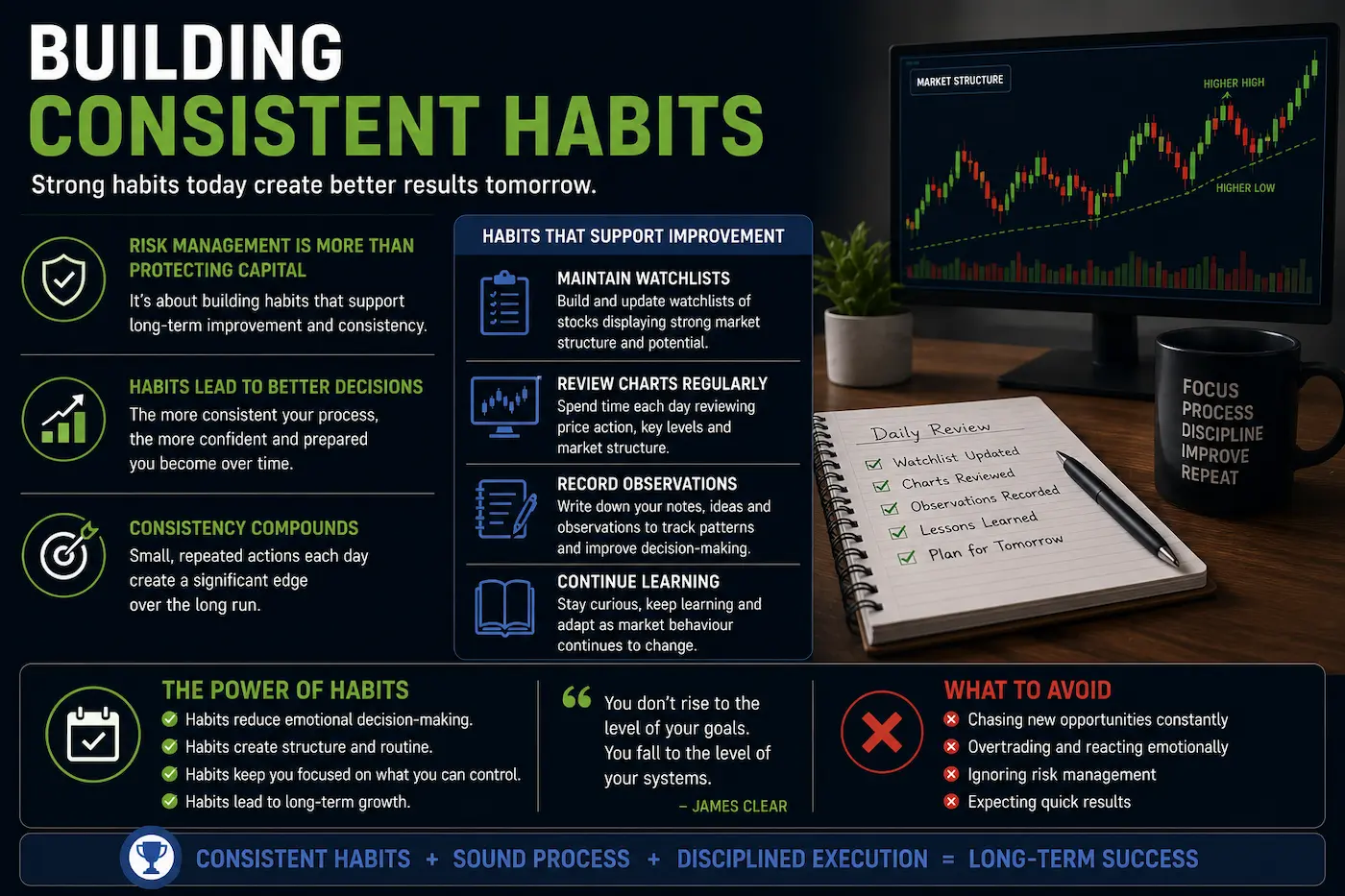
Risk management is not only about protecting capital—it is also about developing habits that support long-term improvement.
These habits include maintaining watchlists, reviewing charts regularly, recording observations and continuing to learn from market behaviour.
Consistent habits often become more valuable than constantly searching for new opportunities.
How EdgeBreak Supports Risk Management
EdgeBreak is designed to encourage thoughtful research rather than impulsive market behaviour.
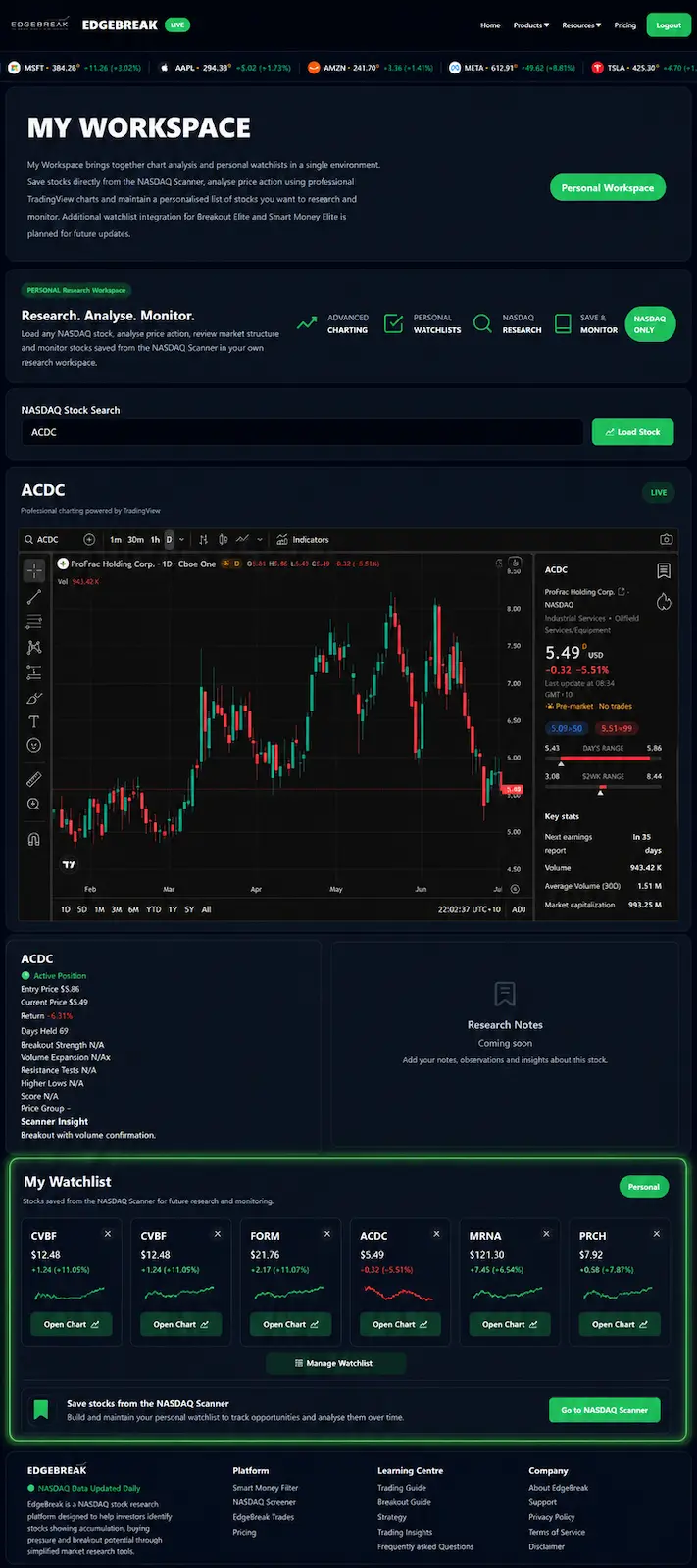
The scanners help identify structured research candidates, while My Workspace allows members to organise watchlists and monitor developing opportunities over time.
By encouraging preparation before market decisions are made, EdgeBreak supports a disciplined and repeatable research process.
Lesson Summary
Risk management is a fundamental part of long-term investing. Understanding that every investment involves uncertainty, protecting capital, following a structured research process and maintaining consistent habits can help investors approach financial markets with greater discipline and confidence.
Key Takeaways
- Every investment carries risk.
- No scanner or research method guarantees future performance.
- Protecting capital supports long-term investing.
- Judge yourself by the quality of your research process, not individual outcomes.
- Consistency and discipline are valuable long-term habits.
Practical Exercise
Review your current watchlist inside My Workspace.
- Choose three research candidates.
- Review their market structure.
- Consider what characteristics made you add them to your watchlist.
- Ask yourself whether your decision was based on structured research or emotion.
- Record one improvement you can make to your research process.
Research Reminder
EdgeBreak Academy provides educational content and structured research tools designed to support independent market analysis. The platform does not provide financial advice, investment recommendations or personalised investment strategies. Always conduct your own research and consider seeking advice from a qualified financial professional where appropriate.
Continue Your Journey
Lesson 2.6 – Planning Your Research
Bring everything you've learned together by creating a structured research process. Learn how to organise your watchlist, evaluate breakout opportunities consistently and develop a repeatable routine for researching the market.